
In this review
The first time you watch a trout make up its mind on a screen, you nearly fall off your bucket. Eighty feet of water under you, and there it is — a fat arc peeling up off the bottom, climbing, hanging two feet under your jig, thinking about it. You twitch once. It eats. Most ice anglers have only ever felt the end of that moment. Now you’ve seen it.
That’s forward-facing sonar. It’s also expensive, takes a full season to stop being a confusing smear, and is hard to recommend with a straight face. So here’s the honest version — what it is, the exact rig I drag onto Colorado ice, how to actually fish it, and whether you should spend the money.
The short version, because I respect your time: all-in it runs about $3,500, it’ll humble you for a full season before it starts helping, and it’s only worth it if you fish big, deep water hard and already have the fundamentals down. If that’s not you, buy a flasher and pocket the difference. If it is — read on.
What forward-facing sonar actually does on the ice
A flasher tells you a fish is somewhere under your hole and roughly how deep. Useful. Forward-facing sonar — Garmin’s LiveScope is the one most people mean — shows you a live, moving picture of a whole wedge of water out in front of the transducer. Fish, bottom, structure, your jig, all of it, updating in real time like a grainy black-and-white video feed of the lake’s private life.
Drop the transducer down the hole, aim it, and you’re looking out across the basin instead of straight down. It does two jobs:
- Scanning out front — finding fish. Aim the cone out across the flat and read the neighborhood before you commit: where the bottom breaks, whether there’s bait, whether there are fish and what depth they’re riding.
- Working a fish — the fight. Once one shows up, keep it and your jig in the same live picture and read every move it makes. You don’t flip to another screen mid-fight — it’s all right there, live.
That second one is the addictive part. You stop fishing the lake and start fishing that fish. It’s also where the trouble starts, but we’ll get there.
My rig, piece by piece
Here’s exactly what I run, with current retail on each piece — every product links to its spec page if you want to dig in.
| Piece | What it does | Price |
|---|---|---|
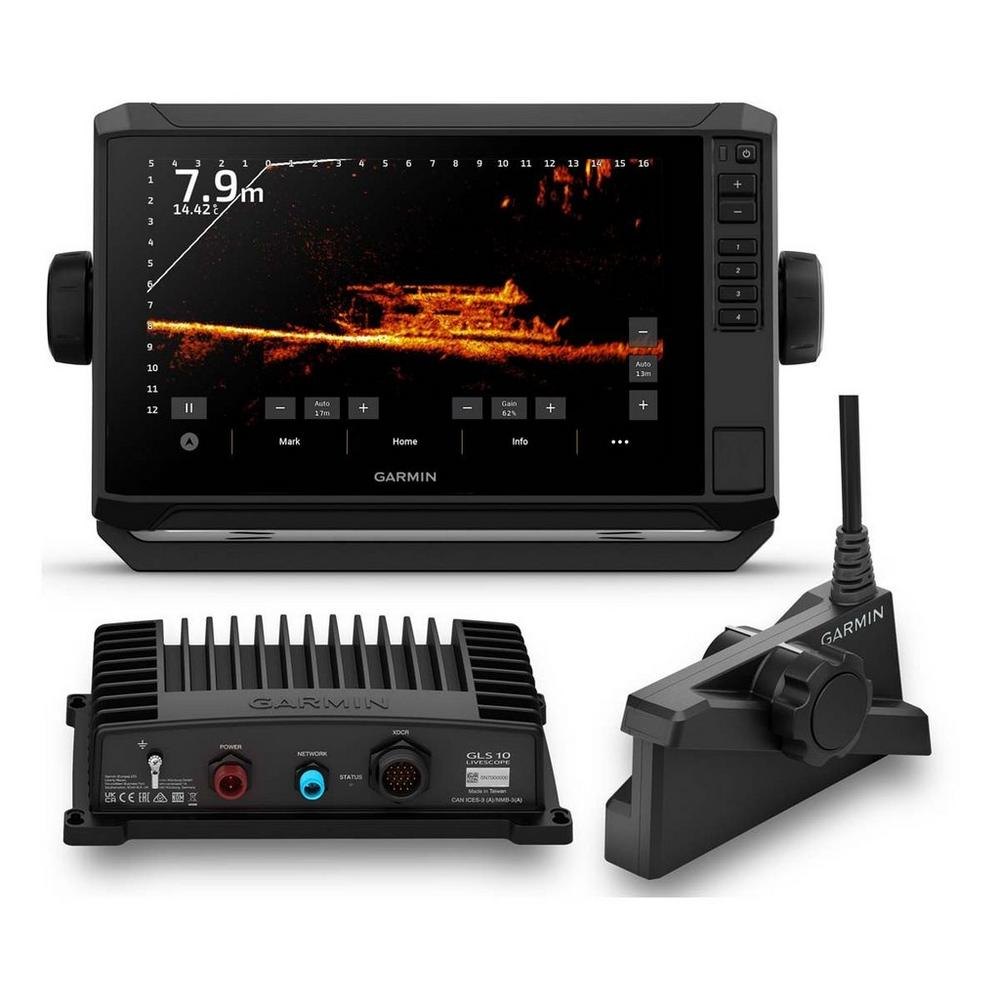
| Garmin ECHOMAP UHD2 93sv + GLS10 + LVS34-IF | The screen, the sonar brain, and the ice transducer | $2,869.98 |
| HD Innovations X-Over Carbon FFS pole + ice tripod | Holds and aims the transducer down the hole | $150–160 all-seasons w/ ice tripod ($160 for LiveScope / ActiveTarget / Mega mounts, $150 Eagle Eye); $130–140 open-water only, no tripod ($140 for LiveScope / ActiveTarget / Mega mounts, $130 Eagle Eye) |
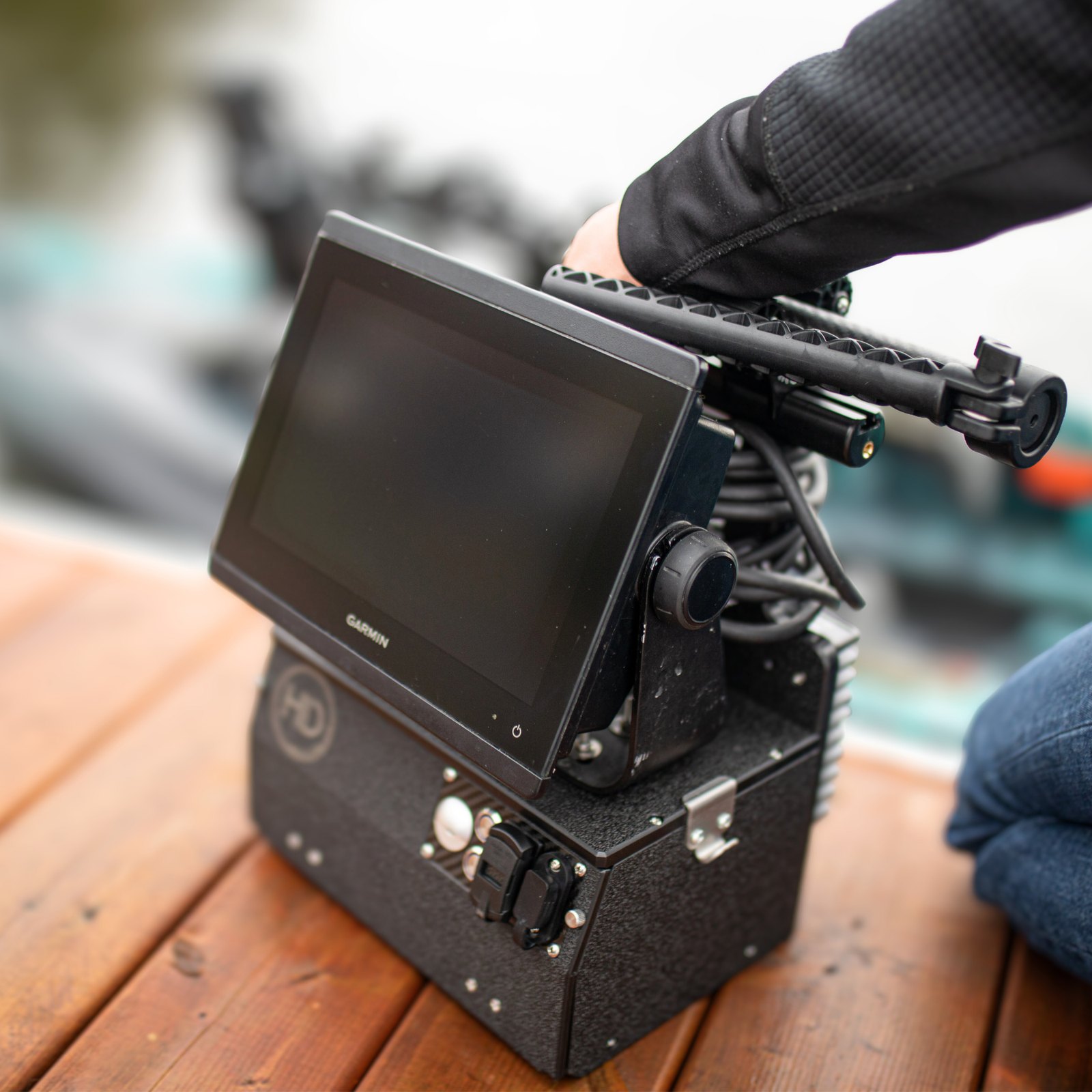
| HD Innovations HDI Shuttle | Carries the screen, battery, and pole as one unit | $240 |
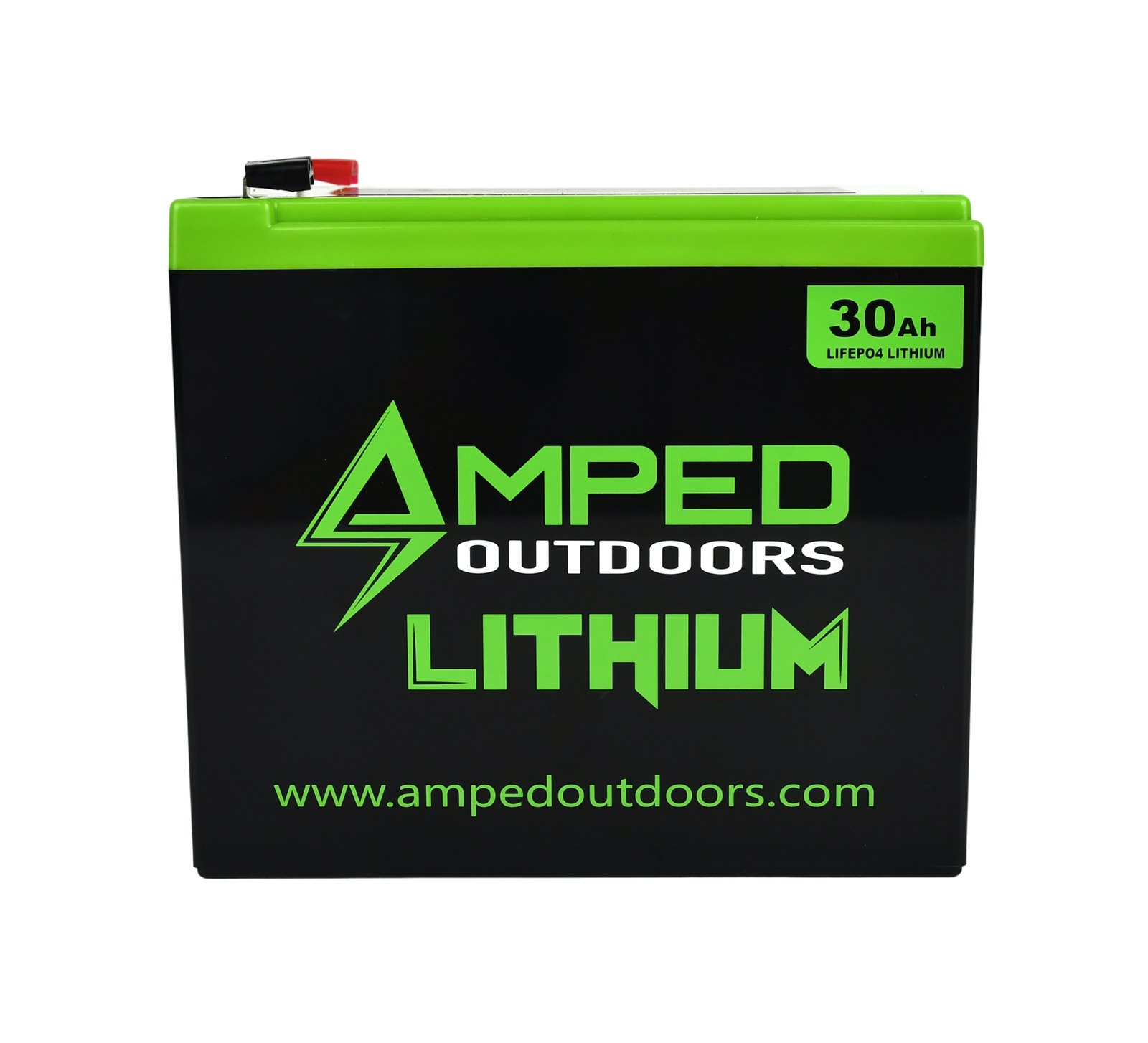
| Amped Outdoors 30Ah LiFePO4 battery | Powers the whole thing all day in the cold | $209.98 |
| HD Innovations 3A LiFePO4 charger | Tops the battery back up overnight | $19.99 |
All in, that’s $3,499.95. Add it up once and you may need to go sit in the truck for a minute.
The sonar brain is a Garmin ECHOMAP UHD2 93sv — a 9-inch touchscreen — wired to the GLS10 black box and the LVS34-IF transducer. The “IF” matters: it’s the ice version, with a flexible cable that stays limp at zero degrees instead of turning into a frozen coat hanger like a standard boat cable does. This is the part doing the actual seeing, and it’s most of the cost. Everything else exists to point it and power it.
The pole that aims it is the piece most people assume they won’t care about, and they’re wrong. The transducer has to hang at a precise, repeatable angle or your picture is garbage, and you have to be able to adjust it with gloves on, in the dark, when it’s well below freezing. I run HD Innovations’ X-Over Carbon pole on its ice tripod — that’s it up top, glowing on the ice at last light. It’s carbon, so the whole thing weighs under two pounds, and the twist locks actually loosen and lock with gloves on — which sounds like nothing until you’ve fumbled a cold aluminum knob with bare fingers at 6 a.m. and said things you wouldn’t say in front of your kid. The transducer mount clicks into a locked 90-degree position, so every hole gives you the same aim, and it takes mounts for whatever you run — Garmin LiveScope, Lowrance ActiveTarget, or Humminbird Mega Live. Buy the bargain pole and you’ll fight your picture all day.
The shuttle is the dullest piece of the rig and the one you’d miss first if it walked off. The HDI Shuttle is a marine-grade plastic box that swallows the screen, the battery, and the pole and turns the whole fragile, expensive pile into one thing you can carry in one hand. Toolless battery tray, a couple of USB ports that keep a phone alive in the cold, a little light for the pre-dawn fumbling. Boring. Essential.
The power is an Amped Outdoors 30Ah lithium battery, and lithium is the only sensible choice here. A lead-acid battery sags and quits in the cold right when you need it; lithium holds its voltage, weighs a third as much, and 30 amp-hours runs a screen like this from before sunup to last light with room to spare. HD’s little charger fills it back up overnight while you’re asleep dreaming about arcs on a screen.
How do I actually use it on the ice?
Two jobs: scout, then hunt. Drop the transducer, spin it through a slow circle to read bottom, bait, and where fish are riding, then drill over the best water. Once a fish shows, keep it and your jig in the same live picture and let its reactions tell you how to work it.
The mistake everybody makes is treating it like a TV. You sit, you stare, you forget to fish. The screen is a scouting tool first and a fishing tool second.
On a new basin, drill a line of holes, drop the transducer in the first one in forward mode, and spin it slowly through a full circle to read the room. Bottom contour, bait, fish, the depth they’re holding. Ten minutes of that saves you an hour of jigging over dead water, which is the ice-fishing equivalent of lying to yourself about being productive. If finding fish on unfamiliar ice is the part that stumps you, that’s a whole skill of its own.
Once a fish is on the screen, let it coach you. You learn fast that a fish that rockets up and stops three feet short doesn’t want movement — so you deadstick it and make it commit. One that follows the lift wants it climbing, so you keep lifting and make it chase. Watch enough of those reactions and you’ll rebuild your jigging cadence around things you never knew were happening under your boots. That part makes you a better angler, screen or no screen.
It will also humble you thoroughly. Nothing puts you in your place like watching, in real time and high enough resolution, a trout swim up, inspect your jig, and decide that you specifically are not worth the calories. Coach a “fish” for twenty minutes and it may turn out to be a clump of suspended weed. The weed wins. The screen tells you the truth, and the truth is often that you’re the problem.
Is it worth it? The honest part
Here’s where I stop selling it, because somebody has to.
All in, you’re looking at about $3,500. That is not a gear upgrade. That’s a category of spending most anglers will never reach and absolutely do not need to. Even if you believe in buying good gear once, this one deserves a long think first.
It has a real learning curve, too. Plenty of anglers catch fewer fish their first season with it, hypnotized by a tablet instead of fishing — thirty-five hundred dollars of electronics dedicated to watching trout ignore them. Expect the better part of a winter before the smear turns into information. Anyone who tells you it’s plug-and-play is selling you something.
And then there’s the honest, uncomfortable bit: it works. It works well enough that the bass tournament world is busy restricting it and a lot of good anglers think it’s tipped the sport into a video game. Check the current CPW regulations before you fish it — rules on electronics can change — but on general public water where it’s allowed, where you draw the line is on you. Mine is simple — it’s a tool, I still have to read the fish and make the right jig do the right thing, and I keep exactly what I’d have kept without it. Does it feel a little like cheating some days? It does. I’ve made my peace with that.
So who should buy it? Honestly, not most people, and never first. If you’re new, a $300 flasher does ninety percent of what this does and will get you catching fish without taking out a small loan. Forward-facing sonar pays off when you’ve already put in the seasons, you fish big deep water where finding fish is the main problem, and you’ve got the money to spend without resenting it. That’s a narrow door. I walked through it because I’m out 80-some days a year and I genuinely love the seeing part. Both of those have to be true for you, or it’s a very expensive paperweight with a screen.
Where it actually shines in Colorado

On a small, shallow pond where the fish are sitting right under you, this rig is like bringing a telescope to read a billboard. It comes into its own on our big, deep reservoirs — the ones where fish roam and suspend and a flasher only ever tells you about the column directly below the hole.
It’s at its absolute best chasing lake trout. They prowl enormous flats and hang off structure in a hundred-plus feet of water, and seeing one slide in from forty feet away — and turning it with the right move — is the difference between a slow day and a story. Chasing lake trout on big deep water is where it pays off most. It’s nearly as good on suspended kokanee, which stack in open-water columns where “straight down” tells you almost nothing. And on the trophy hunt, where a winter can come down to one giant cutbow that you watch decide, it’s exactly the edge you’re after — more on that in trophy trout through the ice and out on deep water like Blue Mesa.
My take
Forward-facing sonar is the most fun I’ve added to ice fishing in years and the hardest gear I own to recommend without a stack of caveats. It’s expensive, it’ll embarrass you for a season, and it’s genuinely too much rod-and-reel for most people most of the time. But if you fish big, deep water often, you’ve earned the fundamentals first, and the idea of watching a trout think lights you up the way it does me — it’s spectacular, and I’d buy it again tomorrow. Just don’t make it your first purchase. Or your second. Earn your way to it, the way the sport intends, and it’ll mean something when you do.
Frequently asked questions
What is forward-facing sonar in ice fishing? It’s live sonar — Garmin LiveScope is the best-known — that shows a real-time, moving picture of the water out in front of the transducer, including fish, structure, and your own lure. Unlike a flasher, which reads only straight down, it lets you scan out across a basin and watch fish approach and react.
Do I need forward-facing sonar to catch fish through the ice? No. A standard flasher costs a fraction as much and catches the large majority of fish for most anglers. Forward-facing sonar pays off on big, deep water where finding roaming or suspended fish is the main challenge — and even then, only after you’ve learned the fundamentals.
How much does a forward-facing sonar ice setup cost? Figure about $3,500. The Garmin ECHOMAP UHD2 93sv with the GLS10 module and LVS34-IF ice transducer is the bulk of it at $2,869.98; add the HD Innovations carbon pole and ice tripod ($160), the HDI Shuttle ($240), an Amped Outdoors 30Ah lithium battery ($209.98), and a charger ($19.99).
Is forward-facing sonar cheating? Check the current CPW regulations before you fish it, since rules on electronics can change. Where it’s allowed it’s effective enough that some competitive circuits restrict it, and where to draw the line is a personal call. It’s a tool — you still have to find the right presentation and make the fish eat — but it’s a real advantage, so fish it honestly and keep only what you’d have kept anyway.
Next: new to hard-water electronics? Bring it all together at the ice fishing hub and the Eleven Mile ice fishing gear guide.