
In this guide
The short answer
When the South Platte blows out past 400-500 CFS during runoff, fish stonefly nymphs deep: a Pat’s Rubber Legs in size 8-10 (brown or black) as your anchor on 3X, with a Wired Stonefly or Kaufmann Stone in size 10 dropped ~18 inches off the back on 4X, worked tight to the soft bank seams at Deckers first, Cheesman as backup. As flows drop to 200-350 CFS and clear, downsize to a Hare’s Ear (size 12-14) or bead-head Pheasant Tail (size 16), and watch for little yellow sallies — a size 14 yellow Stimulator gets surface takes in late May, with Eleven Mile Canyon best once the water clears. Change the fly before you change anything else.
Why Stoneflies Matter More Than You Think in May

Most South Platte anglers think midges and BWOs and then stop. I was one of them for years. That’s fine in February. It’s not fine in May.
When flows on the South Platte start climbing toward 500 CFS and above during runoff, the midge game gets a lot harder. The water colors up, the seams shift, and fish stop eating size 24s off the surface because visibility drops and they’re burning energy holding position. That’s exactly when stonefly nymphs become the most productive thing in your box — and most people aren’t fishing them.
I’ve spent enough May days standing in cold water, fishing a midge rig nobody told the river about, at Cheesman, Deckers, and Eleven Mile to know how this goes. Anglers who adapt to stoneflies during this window catch fish. Anglers who keep throwing the same winter rigs go home frustrated — I’ve been both. This is what finally changed for me.
The Species You’re Actually Fishing To
The South Platte doesn’t have a salmonfly hatch worth chasing the way the Colorado River between Dotsero and State Bridge does. Don’t expect size 4 Pteronarcys adults floating down through Cheesman Canyon. That’s not what’s happening here.
What you do have is a solid mix of smaller stonefly species that are genuinely abundant and active in spring:
Little yellow sallies (Isoperla species) are the most visible. They’re size 14-16, yellow-olive, and they hatch throughout May and into June on the South Platte. When flows are manageable and the water starts clearing in late May, you’ll see adults on the streamside vegetation at Deckers and along the flats above Cheesman. Fish are absolutely keying on the nymphs before that happens.
Little brown stoneflies (Amphinemura and related genera) are smaller — size 16-18 — and easy to overlook, but they’re present in big numbers in faster water. They don’t produce dry fly fishing worth writing home about, but their nymphs are in the drift constantly during high water.
Golden stones are the bigger player on the South Platte in spring. Not the giant salmonfly, but Calineuria and Hesperoperla species running size 6-10. These are what I’m imitating when flows are high and dirty. Trout know these nymphs and they eat them hard.
What to Throw When the Water’s Blown

When flows push past 400-500 CFS at Deckers or Cheesman, forget delicate presentations. This is no time to be precious about it. You need weight, you need profile, and you need to get the fly to the bottom where fish are actually holding.
My go-to anchor fly in this window is a Pat’s Rubber Legs in size 8 or 10, brown or black. It’s not subtle but it works because it moves, it sinks, and it looks like food. I’ll run it on 3X tippet directly off the bend of my indicator setup, then drop a Wired Stonefly or a Kaufmann Stone in size 10 off the back on 4X about 18 inches down. Two flies, both stonefly nymphs, both on the bottom.
The key during blown-out conditions is reading where fish actually go. They don’t stay in the main current when flows blow out — they slide into the soft seams along the bank, behind big boulders, and in the slack water just off fast inside bends. At Cheesman, I’m working the edges tight to the canyon walls. At Deckers, I’m hitting the back side of every midstream rock I can reach. You’re not fishing the middle of the river at 600 CFS. You’re fishing the margins.
Set your indicator depth so the flies are dragging bottom. If you’re not ticking rocks occasionally, you’re not deep enough. Strike at anything — high water means fish eat with less scrutiny and they don’t hold the fly long.
My take
A size 8 rubber-legged monstrosity out-fishing my tidy midge rigs offended my tailwater pride for years — the fish never shared the objection. These days the Pat’s goes on the morning the gauge starts climbing and doesn’t come off until the water clears, and May has flipped from the month I dreaded into one I quietly plan around. If you change one thing about how you fish runoff, change the fly before you change anything else: when the river runs fast and dirty, profile and weight out-earn finesse every single time.
Clearing Water and Emerging Patterns
When flows drop back to the 200-350 CFS range and visibility returns to a foot or more, the game shifts. This is when I start thinking about stonefly emergers and even dry flies in addition to nymphs.
Little yellow sallies are your best bet for surface action. Adults are clumsy fliers and they get knocked onto the water regularly. A size 14 yellow stimulator fished tight to the bank at Deckers in late May produces strikes when conditions are right.
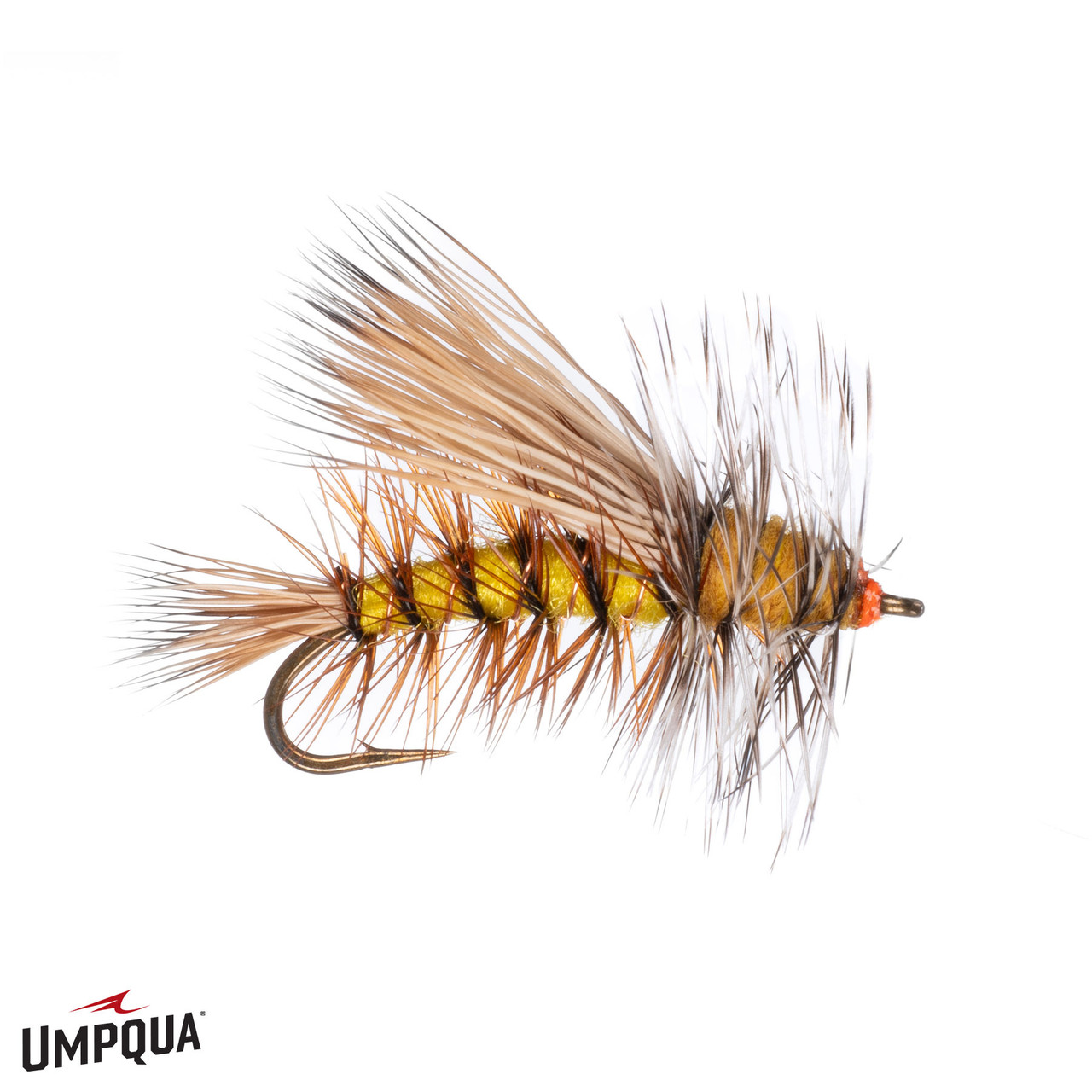 I don’t rely on it as my only setup — I’ll run the dry as an indicator over a small stonefly nymph — but I’ve had genuine dry fly takes on sallies at Eleven Mile Canyon in late May when the flows were in that sweet spot.
For subsurface work during clearing conditions, I downsize. A Hare’s Ear in size 12-14 or a bead-head Pheasant Tail in size 16 bridges the gap between a pure midge rig and a full stonefly setup. Fish are transitioning and the diet is varied. I’ll fish a smaller stonefly nymph behind a Pat’s Rubber Legs even when flows are moderate — the anchor still sinks the rig and the trailing fly picks up trout that want something a little smaller.
Where to Fish Each Section During Runoff
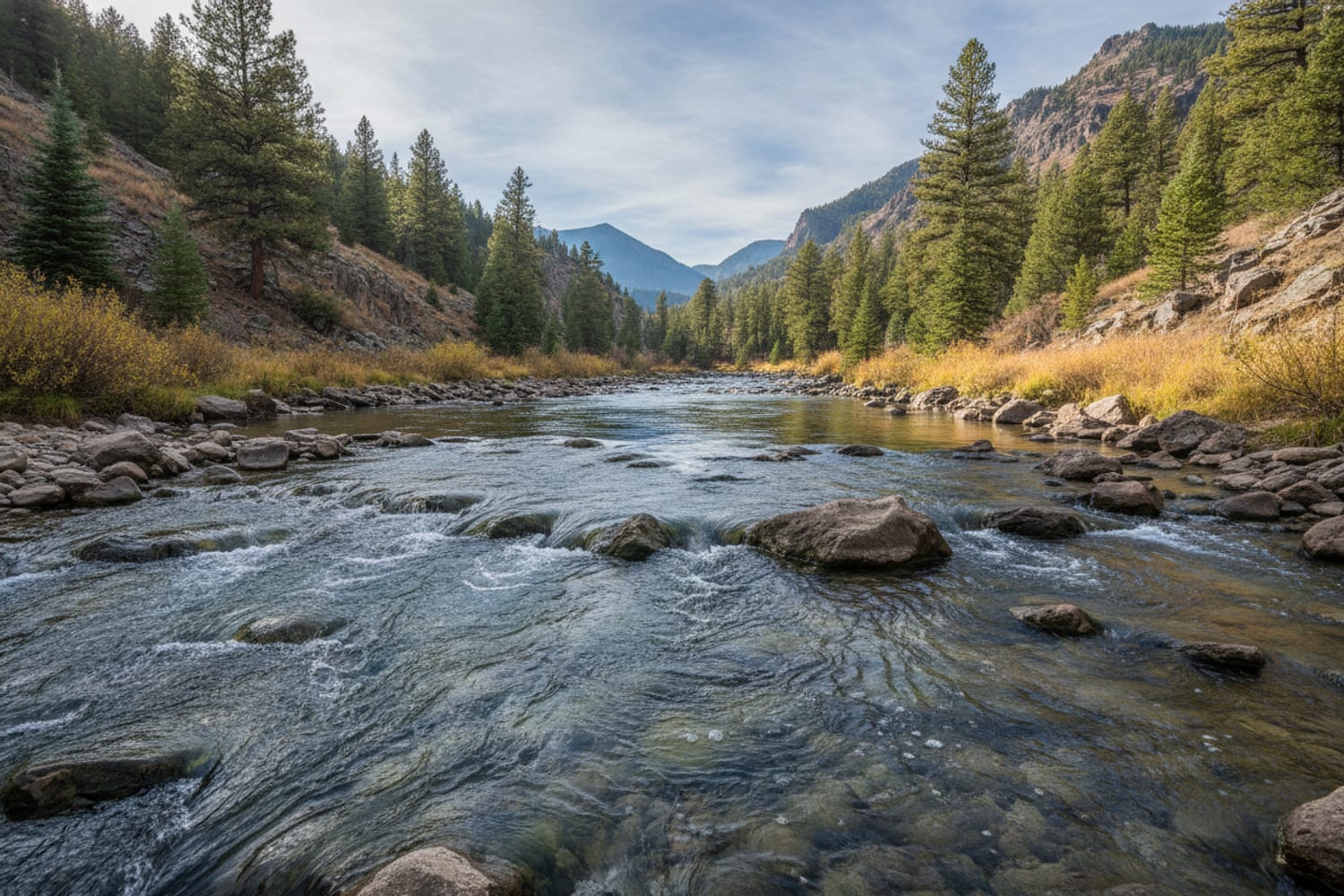
Deckers is my first call during high, dirty water — accessible, well-structured around the bridge, and the soft pockets hold fish even when the main channel is ripping. If Deckers is blown out, Cheesman Canyon is the backup: the canyon walls create consistent structure even in ugly flows. Deep runs along the cliff faces hold fish even when flows are ugly. The walk-in access means you’re not fighting crowds, and the fish there are used to eating big nymphs because that water is fast and oxygenated year-round. The trout in Cheesman are not small and they’re not dumb, but during runoff they’re opportunistic. Fish the deep bank seams and the tail-outs of the canyon pools.
Deep runs along Cheesman’s cliff faces hold fish even when flows are ugly — the walk-in access means you’re not fighting crowds, and the fish there are used to eating big nymphs. This is where I’d go when Deckers is genuinely blown and not worth the drive.
Eleven Mile Canyon gets overlooked during runoff but it’s worth considering. The canyon itself buffers flows a bit and the section fishes well as water drops and clears in late May. The rocky substrate in Eleven Mile grows a lot of stonefly nymphs — it’s the kind of habitat they prefer — and I’ve had excellent fishing there in that late-May window when Deckers and Cheesman are still marginal.
Dream Stream during peak runoff is often a mess of off-color water and is not where I focus. It’s better suited for early April before flows climb hard and again in June once things settle down.
Make the Adjustment and Fish the Hatch That’s Actually There
Runoff is not a reason to stay home. It’s a reason to stop fishing like it’s February. The South Platte in May has stonefly nymphs moving, fish actively feeding in the margins, and far less pressure than the winter months because most anglers see high water and leave. They see a blown-out mess. I see a river that’s about to eat a Pat’s Rubber Legs. Adjust your depth, adjust your fly selection, get off the main current, and fish the edges. The fish are there. It only took me a few wasted May afternoons to figure that out — you don’t have to. For a broader runoff strategy across the full South Platte system, the spring runoff guide covers which sections stay fishable and when to wait it out. The South Platte hatch calendar shows how stonefly timing fits into the full season.