
In this review
Let me be honest about how I ended up here: I told myself for years that a $350 cooler was a ridiculous thing to own, and then I bought one anyway. That’s how most of my gear closet happens. I’ve since carried the YETI Hopper M30 on more South Platte day trips than I can count — full days at Deckers, early sessions on the Dream Stream and Arkansas River, and the occasional long approach into Cheesman Canyon.
After two seasons of hauling it around, here’s the complete picture — what it does well, what it doesn’t, and whether $350 is actually justified or whether I just talked myself into it.
The short answer
Yes, the YETI Hopper M30 is worth its $350 for South Platte day trips — but only if you use it right and you’ll fish 30+ days a year. It holds 30 quarts (~20 cans), the HydroShield magnetic closure beats the old zipper, and the build survived two seasons of granite-dragging and splashing without a leak — but you have to shade it and pack block ice, and for approaches over a mile the cheaper RTIC Soft Pack 20 is the smarter carry. I rate it 4.5/5; the half-point off is the price and the Cheesman-hike weight.
Buy once, cry once, then quietly stop thinking about it.
What the M30 Is
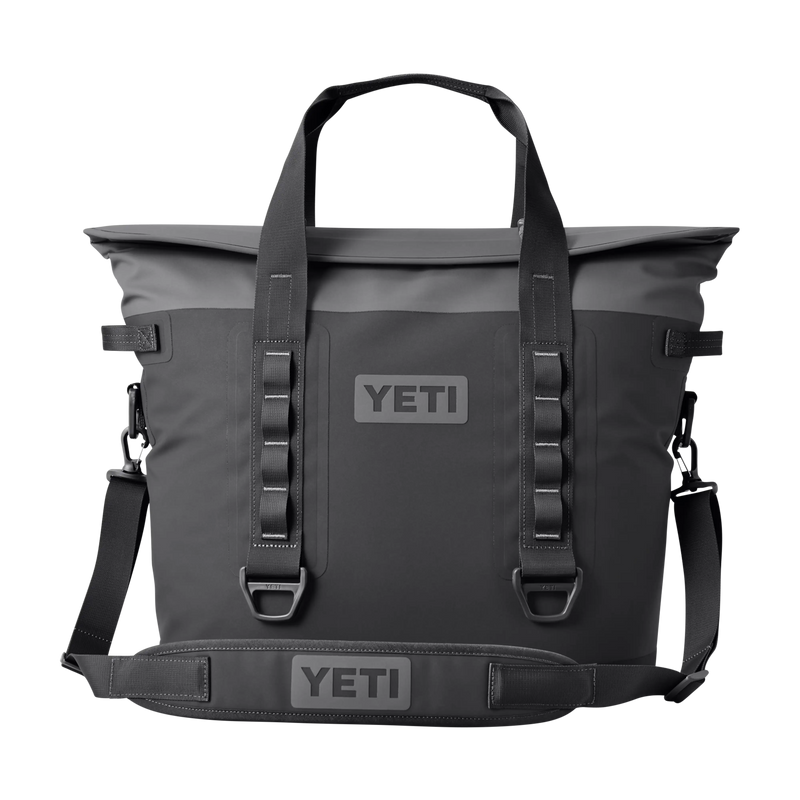
The YETI Hopper M30 is a soft-sided cooler in YETI’s Hopper lineup. The “M” designates the newer magnetic closure version; the “30” indicates the quart capacity. At 30 quarts, it holds roughly 20 cans or, in fishing terms, a full day’s worth of food and drinks with ice for one to two people.
The construction is what separates it from cheaper soft coolers: RF-welded seams (no stitching to fail), ColdCell closed-cell insulation, DryHide exterior shell in YETI’s puncture-resistant coated fabric, and the HydroShield magnetic closure that replaces the zipper of earlier Hopper models.
MSRP is $350.
Ice Retention
YETI claims 24+ hours of ice retention. In field conditions on the South Platte:
Deckers full day, direct sun: Packed with crushed ice at 7 AM, water and melted ice by 1 PM in 80°F direct afternoon sun. The M30 performs significantly better with block ice and shade than with crushed ice in direct exposure.
Cheesman Canyon day trip (shaded hike-in): Packed with 3 lbs of block ice and lunch at 6 AM, ice still present at 4 PM after 10 hours. Cooler spent most of the day out of direct sun behind a boulder. Not fully frozen at the end, but cold.
Dream Stream (South Park elevation, intense sun): The high-altitude UV accelerates heat load. Plan for ice to last 8–10 hours in full exposure at 8,700 feet.
The takeaway: YETI’s claims are achievable under favorable conditions. In Colorado’s intense UV and dry heat, block ice and shade extend performance significantly. Pre-chilling the cooler overnight with ice before you pack your food makes a measurable difference. My take: it’s not magic, it’s physics — shade it, use block ice, and it’ll do its job. Park it in full Dream Stream sun and expect a lukewarm sandwich by lunch. Ask me how I know.
The Approach Question
For most South Platte days — Deckers, the Arkansas River tailwater, Dream Stream — you’re parked within 200 feet of the water. The M30 rides in the back of the truck and you carry it the short distance to your spot. That’s the primary use case and it works flawlessly.
For approaches that require actual hiking — Cheesman Canyon is the test case here, 1.3 miles of rolling granite trail — the M30 earns and loses points simultaneously. This is the part where my shoulder and I had a frank conversation.
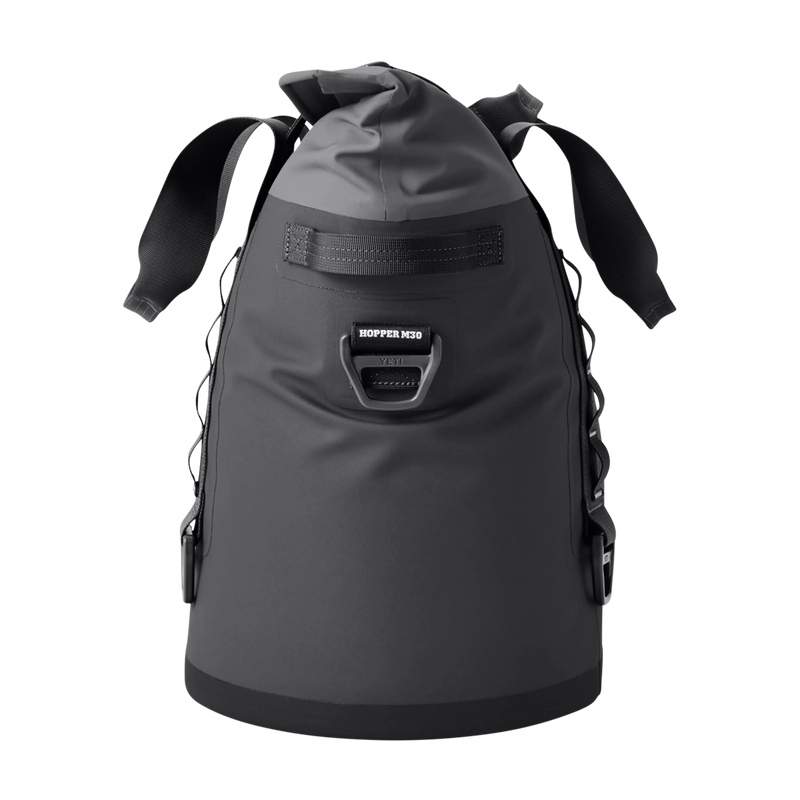
Packed size: The M30 flattens and folds significantly when empty, which makes storage and transport easy. Packed, it’s 17” × 13” × 10” — large enough to be awkward in a standard fishing pack but manageable carried cross-body on the shoulder strap.
Weight loaded: A fully loaded M30 with ice and a day’s food runs 10–14 lbs. That’s meaningful on a 1.3-mile approach with repeated short climbs in both directions and elevation change over uneven granite. I wore it cross-body on the right side and my right shoulder noticed it by the time I reached the canyon.
What works better for long hikes: For approaches over a mile, the RTIC Soft Pack 20 (half the price, similar build) carried in a vest pack slot is more practical. The M30 is the right choice when you’re driving to Deckers, the Pueblo tailwater, or the Dream Stream staging areas — which covers most South Platte days.
The HydroShield Magnetic Closure
The magnetic closure is the most significant upgrade over earlier Hopper models. It opens and closes one-handed, doesn’t collect grit in the zipper track, and seals effectively against water intrusion. I’ve had it sitting on a riverbank in a full afternoon rainstorm and the contents stayed dry.
The limitation: magnets don’t hold as securely as a sealed zipper in extreme conditions. The closure pops open if you compress the sides of the cooler or if it tips over at the wrong angle. Not a failure mode that affects day-to-day use, but worth knowing.
Durability
The RF-welded seams and DryHide shell have held up through two seasons of use that includes:
- Dragging along granite on the Gill Trail
- Water contact (splashing while wading)
- Regular contact with fly fishing accessories (hooks, split shot, rocks in pack pockets)
No leaks, no delamination, no seam failures. The exterior shows scuff marks from rocky terrain but no structural damage. YETI’s build quality is genuinely premium.
The shoulder strap attachment points are the component I watch most carefully — they’re the highest-stress points on a loaded soft cooler. Two seasons in, they’re holding without visible wear.
My take
Two seasons is long enough for a piece of gear to show you what it really is. This one settled into the best place equipment can live: I never think about it. It gets tossed in the truck bed, knocked around, splashed, and it keeps doing its one job on nearly every trip I take. That turned out to be what the money bought — not the logo, the silence. The guy who spent years calling this purchase ridiculous wasn’t wrong to hesitate; he was just wrong about how little he’d care once the deliberating ended and the thing simply worked.
What It’s Not
A good review tells you what a thing won’t do, so here’s where I save you from your own optimism.
Not a seat. Unlike a small YETI hard cooler like the Roadie 24, you can’t sit on the Hopper M30. If you need a streamside seat that also keeps your lunch cold, a small hard cooler makes more sense.
Not ultralight. At 4 lbs empty, the M30 is not the cooler for minimalist anglers. Simms and Fishpond make smaller soft-sided lunch bags that weigh under 1 lb. If you’re doing a 3-mile approach and weight is the primary concern, a simpler insulated bag makes more sense.
Not cheap. $350 is real money for a cooler. The Hydro Flask Day Escape Soft Cooler at $180 and the RTIC Soft Pack 30 at $150 offer competitive ice retention at lower prices. YETI’s margin is in brand and build quality — both real, but the alternatives are legitimate.
Pros and cons
Pros
- 30 quarts — roughly 20 cans, or a full day of food and drinks for one to two people
- RF-welded seams and the DryHide shell took two seasons of granite dragging, splashing, and hooks in the pack with no leaks, no delamination, no seam failures
- The HydroShield magnetic closure opens one-handed, has no zipper track to fill with grit, and kept the contents dry through a full afternoon rainstorm
- With block ice and shade, ice was still there at 4 PM after a 10-hour Cheesman day
- Folds flat when empty, so it stores and travels easily
Cons
- $350, and the Hydro Flask Day Escape ($180) and RTIC Soft Pack 30 ($150) are legitimate at half the money
- Crushed ice in direct Deckers sun was water by 1 PM. You have to shade it and pack block ice — it isn’t magic, it’s physics
- 10–14 lbs loaded is real weight on the 1.3-mile Cheesman approach. Over a mile, the RTIC Soft Pack 20 is the smarter carry
- The magnets let go if you compress the sides or tip it at the wrong angle
- You can’t sit on it, and at 4 lbs empty it’s the wrong bag for a minimalist
Compared to the YETI Roadie 24
The hard-sided Roadie 24 ($250) holds ice longer (multiple days), can be sat on, and locks. It also weighs about 13 lbs empty and doesn’t flex to fit in tight spaces. For car camping or vehicle-access fishing, the hard cooler wins on performance. For anything involving a hike or a boat where packed volume matters, the Hopper M30 is the better choice.
Bottom Line
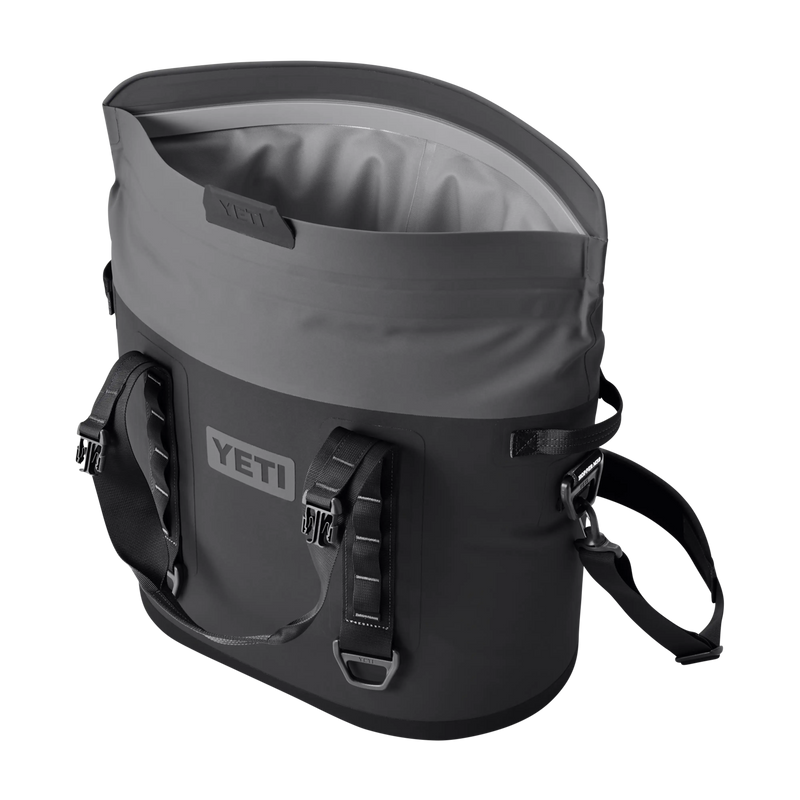
The YETI Hopper M30 is the best premium soft cooler available for South Platte day trips that involve either driving-to-water access or a moderate hike. The ice retention is excellent when used correctly (block ice, pre-chilled), the build quality is genuinely premium, and the magnetic closure is a real improvement over zippers.
At $350, it’s a considered purchase. The alternatives are real and cheaper, and I’d be lying if I said the price didn’t sting at checkout. But if you want the best soft cooler and you’ll use it 30+ days per year, the M30 is worth it — buy once, cry once, then quietly stop thinking about it. For the full gear list that goes alongside it on a South Platte day trip, the South Platte day trip gear checklist covers what’s in the pack and what to leave at the car.
Two seasons in, I still wince at the receipt and reach for it every single time. That’s about the most honest endorsement I’ve got.
Rating: 4.5/5 — the half-point off is for the price and the Cheesman-approach weight. Everything else is excellent.
Some links in this article may be affiliate links. Read our full disclosure.