
In this review
Here’s the morning a good truck kit buys you. It’s 4 AM, the driveway’s dark, the coffee’s hot in the Yeti Rambler, the rod’s already locked on the Riversmith on the roof — and you could be on the road out of Colorado Springs in under three minutes. No checklist. No standing in the garage holding a headlamp, wondering whether you packed tippet.
That’s the whole point of a truck kit.
The pack is what you walk to the river with — I broke that down in What I Bring to the River. The truck kit is what makes the part before the river possible. It’s the layer you didn’t think you’d need, the knife that handles the thing you didn’t plan for, the spare leader for when a willow eats your last one with a fish still rising. None of it gets photographed. All of it earns its space the hard way — by saving a day you’d otherwise have lost.
Here’s everything that lives in mine, year-round.
What should you keep in your truck for fly fishing?
The short version: the stuff that lets you leave at 4 AM without thinking. Two knives, a warm jacket, a backup leader-and-tippet kit, food and water that survive a hot cab, and a headlamp. Rods ride on the roof, not in the cab. Everything else earns its place by rescuing a trip you didn’t plan for. Now the long version — because the details are where this either works or doesn’t.
Two knives — different jobs
A truck without a sharp blade is a truck with a problem waiting to happen. I keep two Montana Knife Company blades in the rig because they do completely different jobs and I got tired of asking one knife to be both.
The everyday one is the MKC Castle Rock — a pocket-sized fixed blade in MagnaCut steel, built for EDC. Cord, packaging, a stubborn fly-box latch, a sandwich at the tailgate — that’s the Castle Rock. It rides in the center console and never goes back in the house, which is the only reason it’s always there.
The fish one is the MKC Westslope — also MagnaCut, G10 handle, but the blade’s purpose-built for cleaning a trout on the bank the rare day I’m keeping one for dinner. It’s a freshwater fishing knife, not a utility blade, and it sits in its sheath until the day calls for it.
The multi-tool is a Leatherman Arc. I went through three multi-tools before this one — the kind of slow, expensive education where you keep buying the cheaper option and keep being disappointed. The Arc’s pliers are strong enough to back a hook out of a finger if it comes to that (it has). The bit driver has fixed a loose reel seat in a gravel pullout. The blade holds an edge through genuine abuse. It’s the only multi-tool I’d buy again.
My take
You don’t need two knives and a multi-tool to fish. You need them the one day something goes sideways 90 minutes from cell service — and that’s exactly the day you’ll be glad past-you over-prepared.
The jacket that lives behind the seat
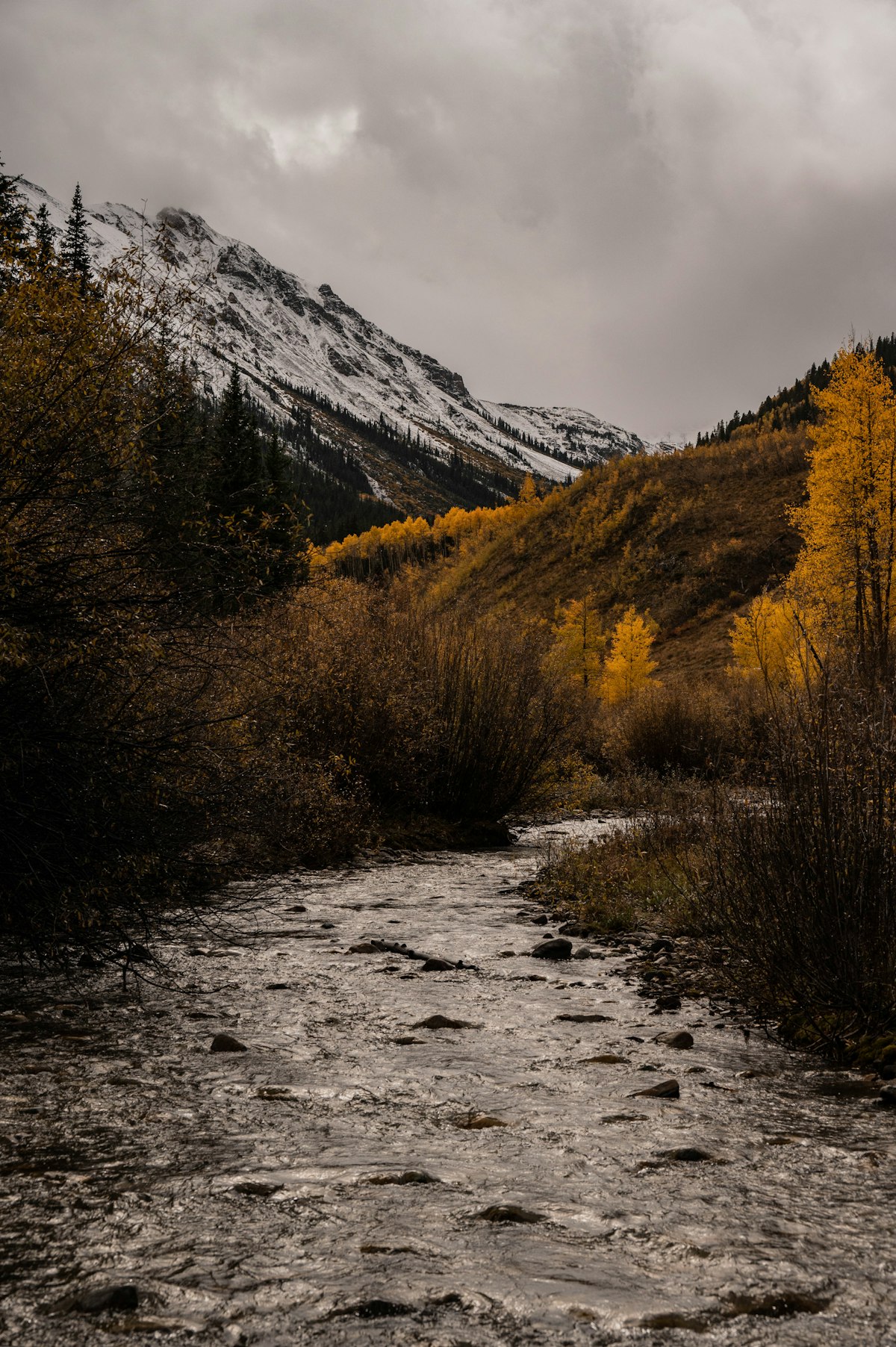
Cold shows up in June on the Dream Stream at 9,000 feet, and it does not care what the weather app promised back at the trailhead.
The Skwala RS Jacket lives folded behind the driver’s seat October through May, and rides shotgun all summer for the mornings that start cold and turn hot by ten. The number of times I’ve reached back for it on a day I “definitely wouldn’t need it” is the entire reason it never leaves. The math is simple and it’s always the same: the jacket that isn’t with you is the jacket you needed.
When it gets properly serious, the Skwala Thermo 350 Hoody goes on underneath as a mid-layer. It doesn’t fold small, but on a sub-freezing morning that bulk is the difference between fishing and quitting at nine.
A spare beanie and gloves live in the door pocket. Cheap to stock, miserable to be without.
The boring kit nobody writes about
This is the stuff that’s invisible until it isn’t. In a small dry bag in the back seat:
- Three Scientific Anglers leaders, 9’ 5X
- Four spools of fluorocarbon tippet, 4X through 7X
- A tin of tippet rings, floatant, desiccant
- A duplicate of the nymph box that lives in the pack — Blowtorches with orange tags, Blowtorches with green tags, RS2s, Perdigons, Walt’s Worms, Zebra Midges, Mercury Black Beauties
Total cost of that little bag is maybe $80, and it pays for itself the first time you’re 90 minutes from town and your last leader disappears into a streamside willow. If I ever drop the pack box in the river — and one day I will, because everyone eventually does — this is the backup that saves the day instead of ending it.
You can stock most of it through The Fly Fishing Place — use code RDC at checkout.
The pack and the net — day-dependent
The pack that actually rides on me, and the net that clips to it, depend on the day. Whichever I’m running gets loaded the night before and rides shotgun to the river — they don’t live in the rig full-time. Full breakdown’s in What I Bring to the River.
Food, water, and the stuff that keeps the day going
The rule is simple: it has to survive a hot truck cab and a long day, plus a few things that make the drive home better.
- 2 liters of water in a hard-sided jug behind the seat, topped off at every gas stop.
- Beef jerky in a sealed bag — whatever looked good at the last gas station.
- Sandwiches made the night before, in the cooler.
- Black coffee in a Yeti Rambler — filled at 4 AM, still warm at noon, still drinkable in a way that defies physics.
- A Yeti cooler in the bed. I run a rotation — hard cooler for long days, soft Hopper for short runs, a small bag for sandwiches. And beside the water and the jerky, there’s almost always a beer in there for the tailgate at the takeout.
This isn’t lunch — lunch goes in the pack. This is the kit for the day that runs longer than planned, which is most of the good ones.
The cigar
A Montecristo No. 2 rides in a travel humidor in the center console, next to a cutter and a torch lighter — the whole ritual lives in one small leather pouch.
After a good day, I’ll light it at the tailgate before the drive home. River settling down, rod broken down beside me, sun dropping behind the canyon wall. That’s the part nobody photographs and the part that matters most. Fishing isn’t really about catching fish. This is the part — and it lives in the truck specifically so I can’t forget it on the kitchen counter.
The small stuff that saves a day
- Olight headlamp with fresh batteries. The beam pattern beats every other brand I’ve tried, and a dead headlamp at a 5 AM trailhead is its own special misery.
- Microfiber towel — drying hands, wiping mud off a reel, sitting on a wet tailgate.
- A roll of paracord and a pair of Gerber shears. Not for fishing — for everything else.
- Spare bootlaces. Sounds dumb right up until you snap a wading-boot lace at the trailhead and stand there doing math on how badly you want it.
- A box of contacts and saline. I lost an entire day once to a contact tearing on the drive to Deckers. Never again.
What’s NOT in the truck
Just as useful to know what doesn’t earn the space:
- Rods. They live on the Riversmith on the roof, not rattling around the cab. If you’re shopping rooftop rod transport and the Riversmith isn’t right for your rig, Trxstle builds a heavy-duty rod-vault system that’s the other serious option in the category — Helena-based, machined aluminum, fits standard crossbars. Use code RockyDriftCo10 for 10% off if you go that way.
- Reels. They live with the rod that owns them.
- Frozen flies. I’ve heard the argument for stashing fly boxes in the freezer. I don’t buy it. Flies live in the pack; the spare box stays in the dry bag.
Frequently asked questions
Do I really need a separate truck kit if I already have a good pack? Yes — they solve different problems. The pack is for fishing; the truck kit is for everything that happens before and after, and for the day your pack gear fails or gets lost. The backup leader-and-tippet bag alone justifies it.
What’s the single most-used item in your truck kit? The MKC Castle Rock knife and the Yeti Rambler of coffee, in a photo finish. After that, the Skwala RS Jacket — I reach for it constantly on mornings I swore would be warm.
How do you keep it organized so you can actually find things? Everything lives in a fixed home: knives in the console, jacket behind the driver’s seat, backup tackle in one dry bag, food in the cooler, the cigar pouch in the console. The whole system works because nothing moves — I never search, I just reach.
Does gear survive being left in a hot truck all summer? Most of it, yes — steel, hard goods, sealed tippet, and leaders are fine. The things I rotate out or protect are anything that melts or degrades: chocolate-anything, and I keep the cigar in a travel humidor so the cab heat doesn’t cook it.
The real reason this matters
The trips that produce the best fishing are the ones you didn’t have to talk yourself into. You see a weather window on a Tuesday morning — you go. A hatch report lands at 9 PM the night before — you set the alarm for 4. The truck kit removes the friction. You’re not running a mental checklist at the door at 4 AM; everything you’d think to bring is already exactly where it belongs.
Fishing isn’t about gear, and a truck kit isn’t either. It’s about being able to leave without thinking. Once that’s solved, the part that’s actually about fishing can begin.