
In this guide
I’ve been taking fishing photos for as long as I’ve been fishing seriously, which means I have a hard drive full of evidence that I had no idea what I was doing. Flat light, fish held up by my face like a trophy, no story anywhere in the frame — at the time I thought they were great. They were not. Learning to take better fishing photos improved both the images and, more importantly, how I handle the fish for the camera. That second part matters a lot more than my ego did.
The short answer
Great South Platte fish photos come down to two things: keep the fish out of water 20 seconds max — handling time shorter than fight time — and shoot in soft light, meaning morning at Deckers before 9 AM or an overcast day, never midday high sun. Hold the fish low over the water, wet your hands first, and know your exposure before it’s in hand. A phone in that morning window beats a mirrorless (a Sony ZV-E10 or Fujifilm XT-30) fired carelessly at noon.
The fish outlives the photo. Set the shot up first, then bring it up for one or two frames and let it swim.
The Fish First Rule
Before any photography consideration: if you’re going to photograph a fish, the handling time should be shorter than the fight time. A fish that fought for three minutes and was photographed for three minutes before release is a fish in serious stress. A fish that fought for three minutes and was photographed for 20 seconds is a fish that swims off healthy.
Set the shot up before the fish is in hand. Know your exposure, check your framing, have the camera ready. Then bring the fish up for one or two images and put it back. Most of my keeper shots come from the third or fourth outing with the same species in the same light — by then I know the shot I want and I execute it in seconds.
The 20-second rule: If the fish has been out of the water for 20 seconds, it goes back. Period. More photos are not worth a dead fish.
Light on the South Platte
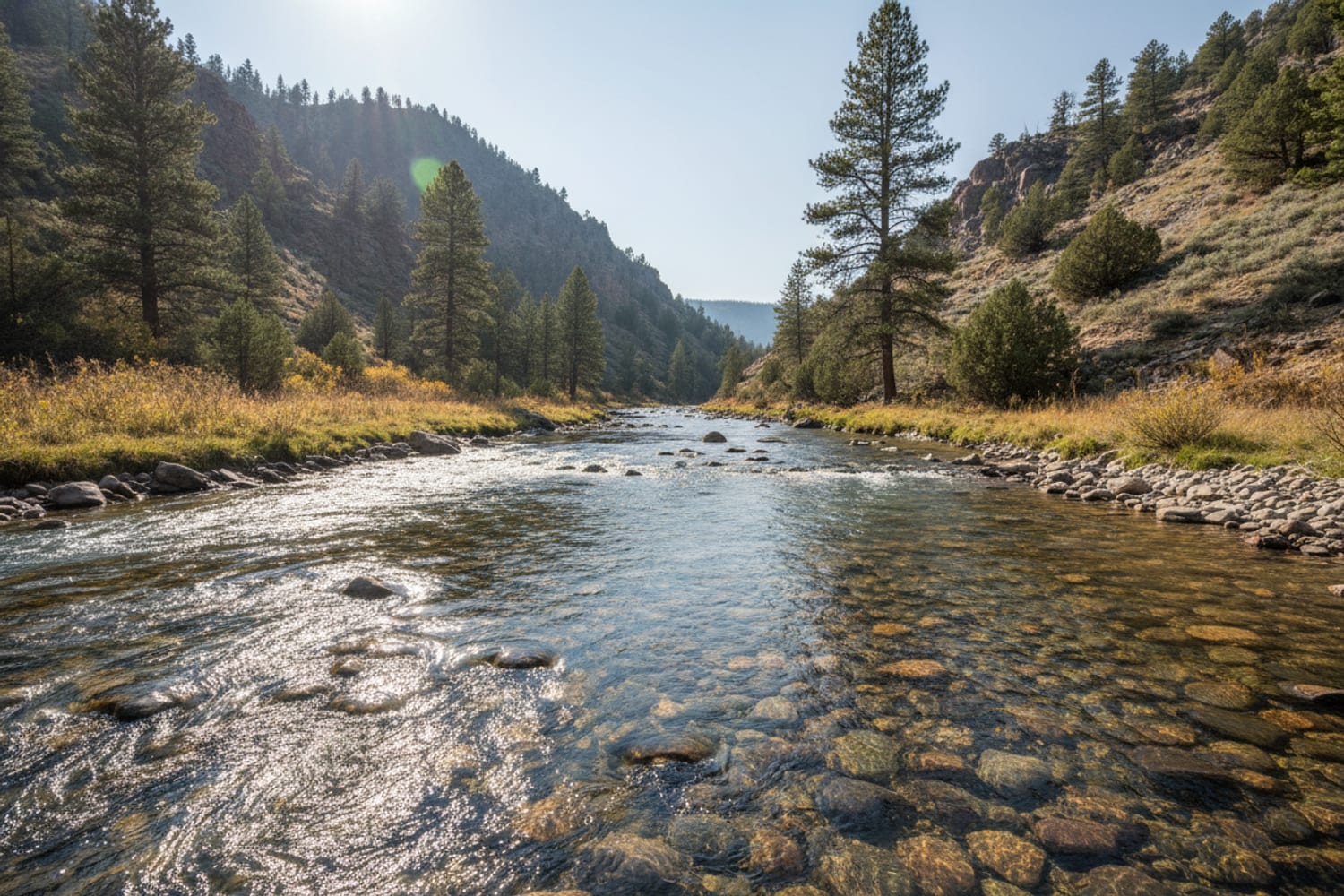
The South Platte canyons are dramatic light environments. Cheesman Canyon doesn’t see direct sun until mid-morning in summer. Deckers has open exposure with harsh midday light. The Dream Stream’s meadow reflects sky light differently than the canyon sections.
Best light on the South Platte:
- Morning at Deckers: Soft directional light before 9 AM. Golden angle on the water, manageable contrast, catchlights in the fish. This is the window I shoot for fish portraits.
- Overcast all day: Flat light eliminates the shadow problems of direct sun. Gray cloud days produce consistent, flattering results for fish-in-hand shots. The ambient light wraps around the fish without harsh shadows.
- Late afternoon in the canyon: Cheesman gets beautiful low-angle light in the canyon corridor after 4 PM. Casting silhouettes, backlit river scenes, the gold light on the water. Better for environment/action shots than fish portraits.
Avoid: Midday high sun on flat water. The reflections are uncontrollable, skin tones on fish look washed out, and the background contrast is hard to manage. This is the most common time people take photos and the most difficult light on the South Platte.
Camera and Gear
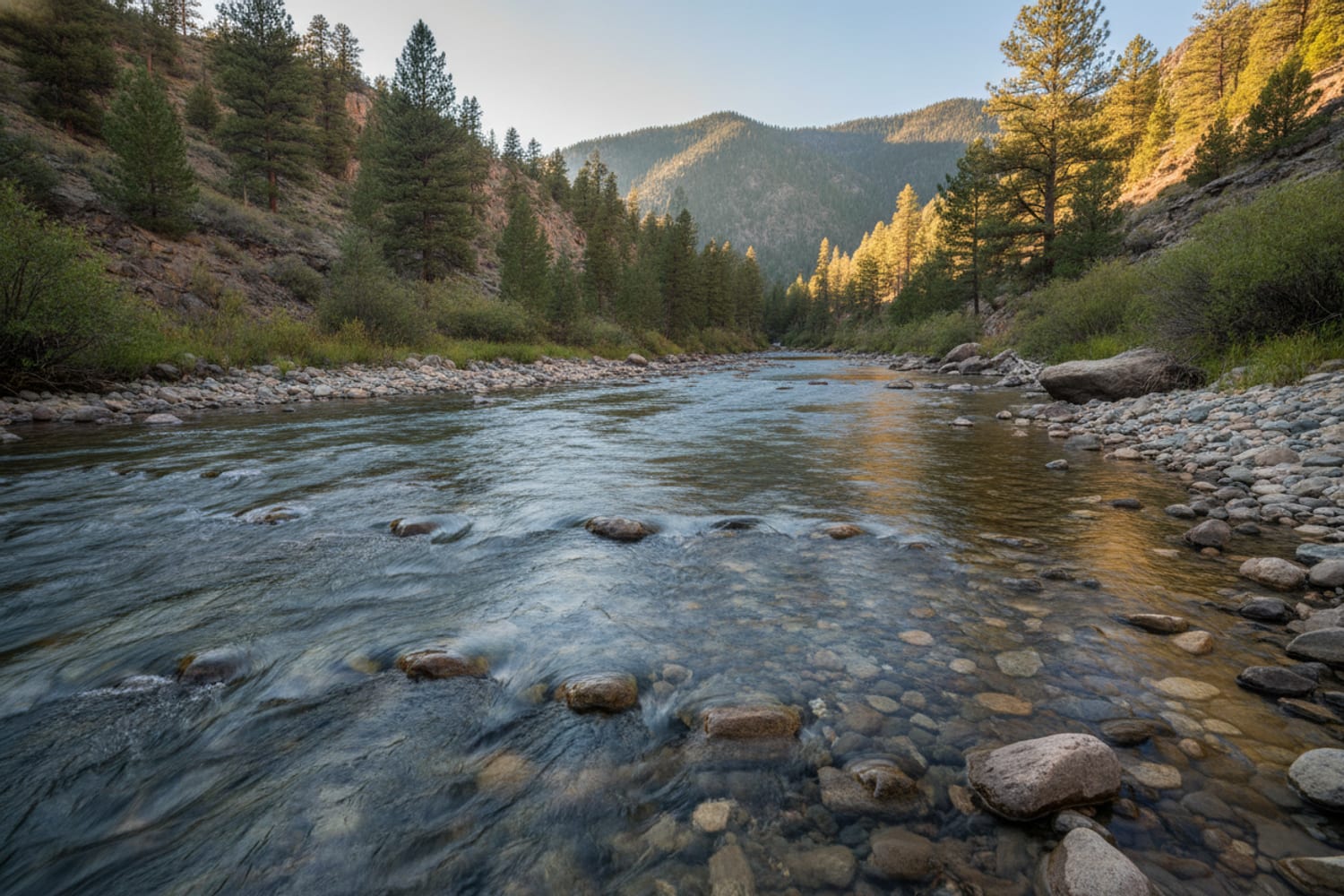
You don’t need a professional camera to take great fishing photos, and I say that as someone who has talked himself into buying gear he didn’t need more than once. A modern smartphone in good light produces excellent results. The limiting factor is usually the handler (someone holding the fish), not the camera.
Smartphone: The wide-angle lens on most phones captures fish held close to the camera — which is exactly how fish should be photographed (close to the frame, held low over water). Google Pixel and iPhone produce excellent outdoor photos without needing any camera knowledge.
Action camera (GoPro, Insta360): Good for immersive point-of-view shots — camera mounted on the rod, on a helmet, or on a chest harness. Not the right tool for fish portrait shots but excellent for casting sequences and river-level shots.
Mirrorless camera: If you’re serious about fishing photography, a small mirrorless body (Sony ZV-E10, Fujifilm XT-30) with a 35mm or 50mm equivalent lens produces significantly better results than a phone in difficult light. The limitation is getting it to the water safely — a dry bag and careful handling is necessary on the South Platte.
My take
My working setup now is almost embarrassing: the phone, zipped in a chest pocket, exposure checked before the fish ever comes to hand. Some of my favorite days end with zero photos, and I’ve stopped counting that as a loss. The expensive lesson — and I paid for it more than once — is that the camera was never the limiting factor; the light and the handling were. Get yourself out in the soft morning window and keep the fish wet and low, and a phone will beat a mirrorless fired carelessly at noon every single time.
The Fish-in-Hand Shot
The standard fishing photo — angler holding fish horizontally for camera. Most of them are bad. Here’s how to get a good one:
Hold the fish low over the water. A fish held chest-high with a canyon background looks dramatic but falls badly if the fish slips — and falls far enough to cause impact injury. A fish held 6 inches above the water surface is safe, looks close and connected, and has the river as a background.
Horizontal fish, two-handed support. Support the fish under the body with one hand and under the tail with the other. Don’t squeeze. A fish that’s comfortable in your hands holds position naturally. A fish that’s uncomfortable thrashes and creates blur in the image.
Wet your hands first. Cold water on your hands keeps the fish’s slime coat intact. Dry hands pull slime off the fish and create patches that photograph as white marks — the most obvious sign of poor fish handling in photos.
Get low. Kneel in the water if needed. The camera angle that produces the best fish portrait is at or below water level — you see the fish’s profile, the water surface, and the angler’s hands in a coherent frame. A camera held above the angler’s eye level looking down produces a distorted image where the fish looks small and the angler looks large.
The Landscape Shot
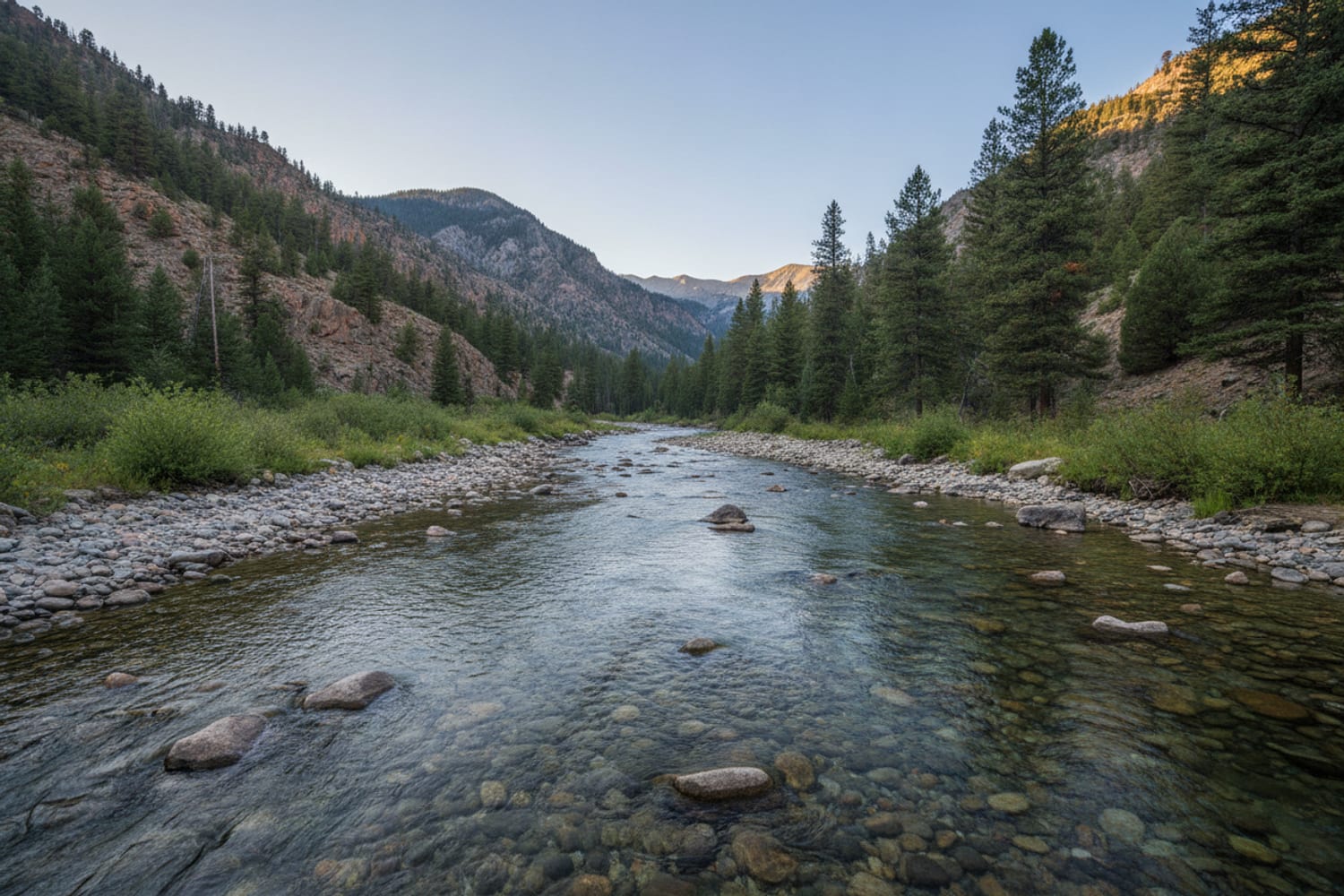
The South Platte is one of the most photogenic fishing environments in Colorado. Cheesman Canyon’s granite walls, the Deckers valley, the South Park meadow sections at the Dream Stream — all worth photographing independently of whether there’s a fish in hand.
Include a person. An empty river photo is fine as a reference. A fly fisher in the frame — even small, even in the distance — creates scale and tells a story. The lone figure in a canyon gives the photograph context.
Look behind you. The compulsion to photograph the river in front is strong. Some of the best South Platte landscape shots come from turning around and shooting the approach, the canyon walls, or the reflected sky in still water.
Shoot during the hatch. Rising fish, casting, the concentration of an angler watching a rise — these moments are more interesting than posed shots. An angler watching the water before a cast tells a better story than the same angler posed for the camera.
One More Thing
The best fishing photos from the South Platte I’ve seen aren’t of the biggest fish. They’re of the moments — a PMD spinner falling on the water, a fish surfacing in flat light, the approach hike in morning shadow. Those images tell a story about why this place matters. Take the fish portrait if you catch something worth photographing. But don’t miss the other shots while you’re at it — the fish-grip-and-grin will look the same as everyone else’s, and the quiet morning frame is the one you’ll actually want on the wall. If a morning at Cheesman is on the calendar, the Cheesman Canyon access guide has the approach logistics — including tips for packing camera gear on the 1.3-mile hike in.